
The short answer
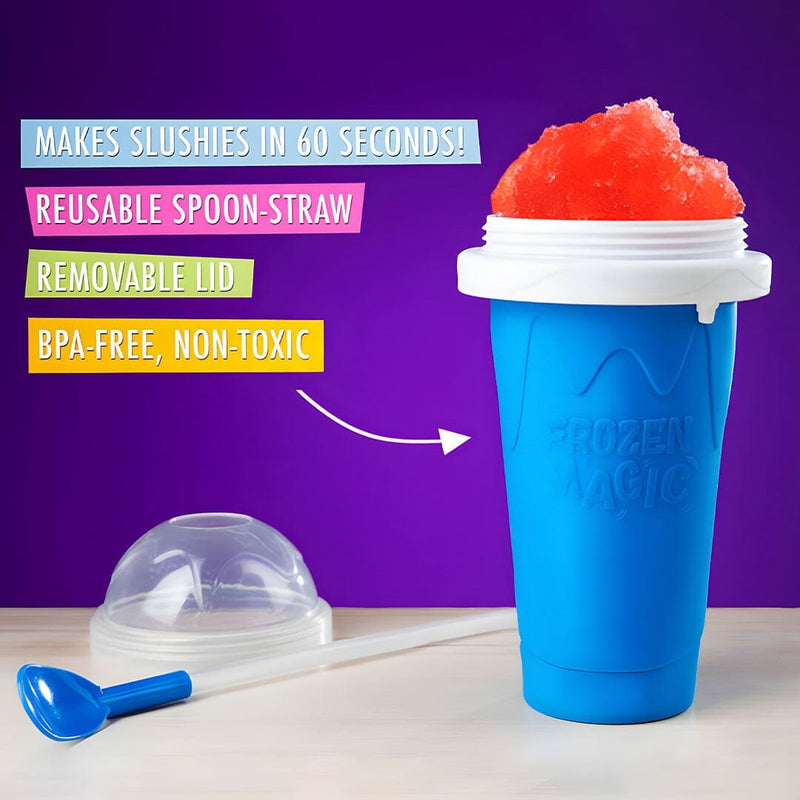
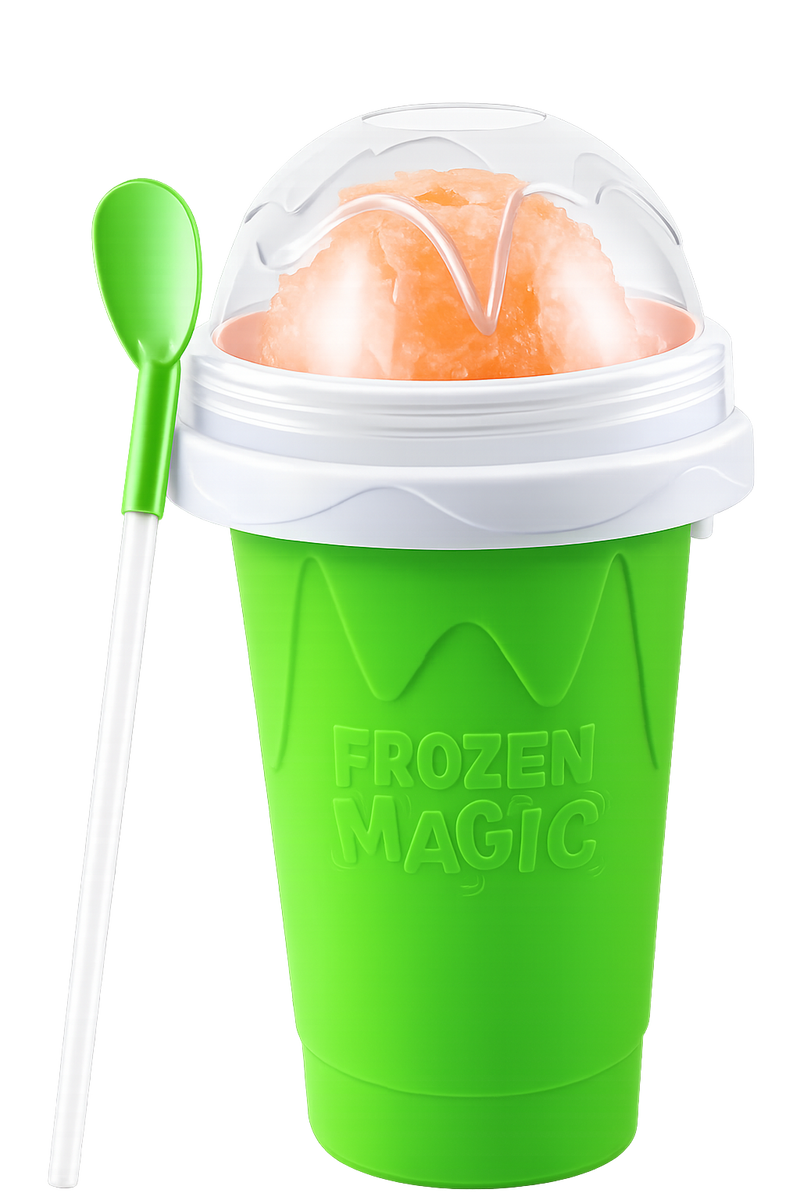
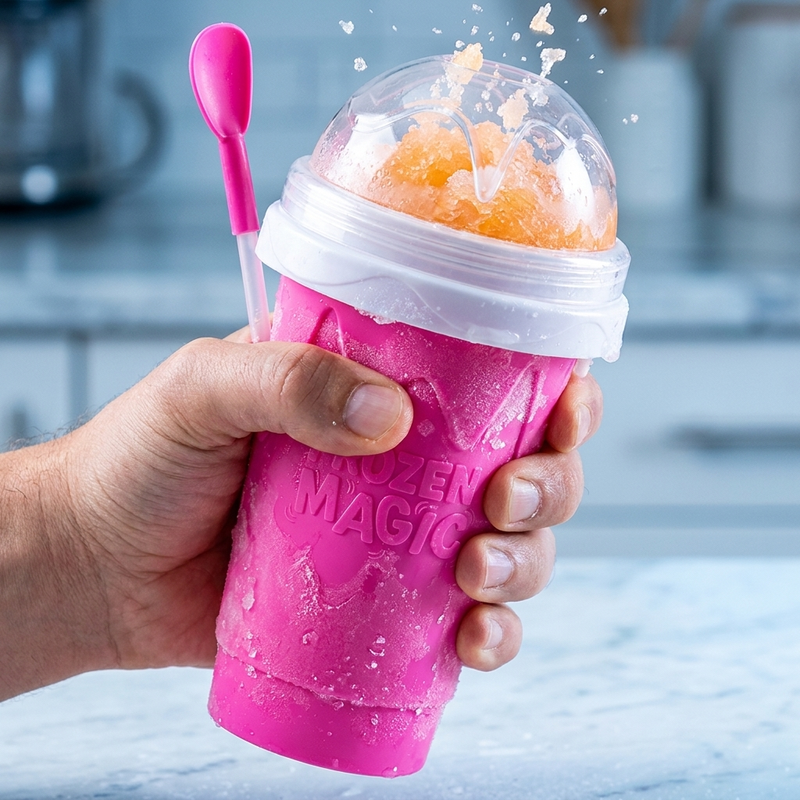
The best slushy cup freezes in a normal home freezer in four to six hours, squeezes easily in one hand, holds about 300 ml so it slushes evenly, and comes with a lid and a wide straw. Ours is the FreezenSlush Slushy Cup: 300 ml, BPA-free food-grade polymer, slush in 30 to 60 seconds, 4.7 stars from 1,277 reviews, $19.99 in the US, with a 30-day money-back guarantee.
Where to buy: direct from us on the Slushy Cup page, in blue, green, yellow or pink. The rest of this guide covers the five things that decide whether any squeeze cup actually works, ours included.
A squeeze cup is a simple thing that is easy to get wrong. The good ones turn a cold drink into thick slush in about a minute. The bad ones give you a cold drink with a few ice crystals in it and a sore hand. The difference is not branding. It comes down to five things you can check before you spend anything.
First, how these actually work
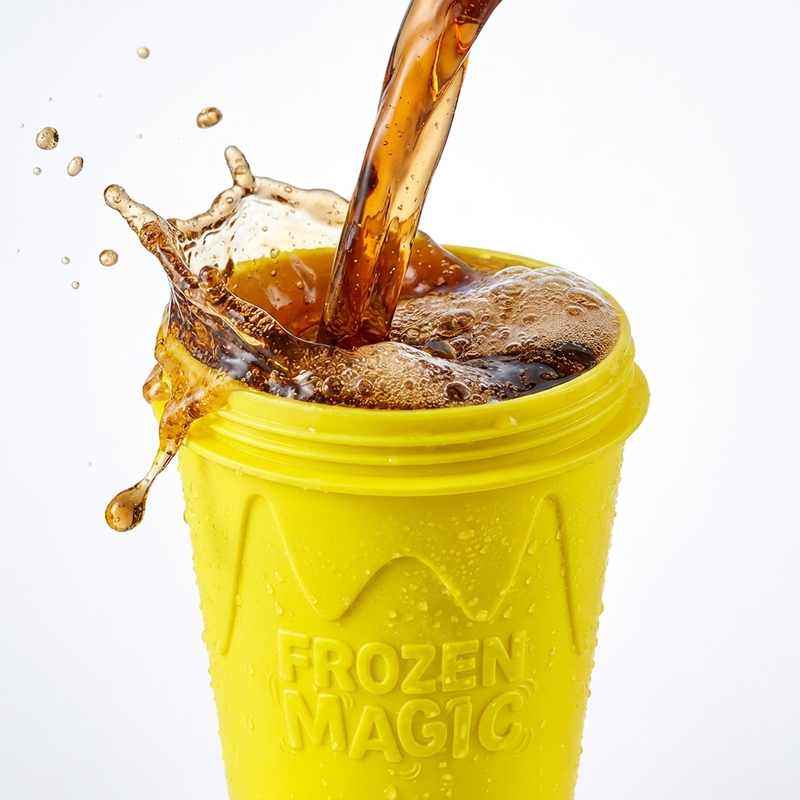
There is no motor and no ice. The cup has a layer of freezing gel sealed inside a double wall. You put the empty cup in the freezer until that gel is solid, then pour in a cold drink and squeeze. Squeezing drags the liquid across the frozen inner wall over and over, and each pass strips a little more heat out of it. After roughly sixty seconds you have slush.
Everything that makes one cup better than another comes back to that mechanism: how cold the gel gets, how easily the wall moves, and how much liquid you are asking it to chill.
1. Freeze time, and the temperature you actually keep
Most cups need four to six hours at −18°C (0°F). Overnight is the honest answer, because most home freezers sit warmer than their dial claims, especially if the door gets opened a lot.
This is the single most common reason a cup “does not work”. If the gel is not fully solid, there is no cold reservoir to draw from, and no amount of squeezing will fix it. Before you blame the cup, check the freezer. If you want the full checklist, we wrote one: why a slushy cup will not freeze.
What to look for: a stated freeze time and a stated temperature. A product that gives you a time without a temperature is telling you half the story.
2. How much the wall actually gives
This is the one nobody mentions and everybody feels. The wall has to be stiff enough to hold its shape when frozen and soft enough that you can work it for a full minute without your hand cramping.
Too rigid and you cannot move the liquid at all. Too soft and the cup collapses and springs back without pushing the drink across the cold surface. A cup taken straight from a very cold freezer will always feel stiff for the first minute or so. That is normal and it eases. A cup that never gives is not.
What to look for: a food-grade wall with real give in it, and reviews that mention squeezing comfort rather than just the end result. If a cup is hard to squeeze even after it warms slightly, something is wrong with it.
3. Capacity, and why bigger is not better
More liquid means more heat for a fixed amount of gel to remove. Push past what the gel can handle and you do not get a bigger slushy, you get a cold drink.
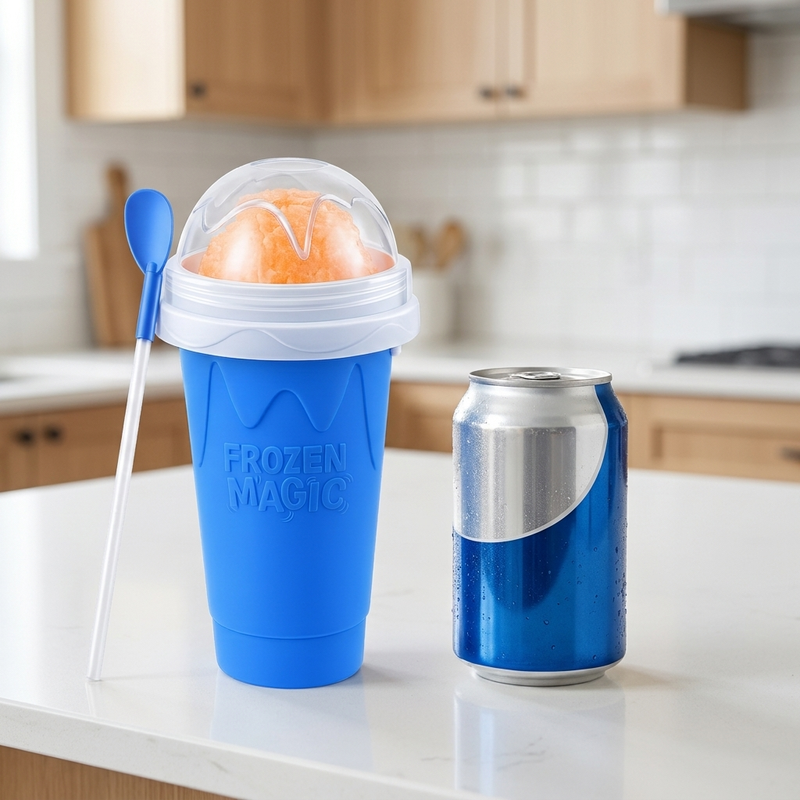
Around 300 ml (10 fl oz) is the sweet spot for a single-serve cup. It is a normal drink, and it is little enough that one freeze cycle can actually get through it. Cups advertising much larger volumes on the same gel layer are quietly making a trade you will notice on the first try.
What to look for: a capacity figure in millilitres or fluid ounces, not “large”.
4. The lid and the straw
The lid is not decoration. It is what stops slush coming back out of the top while you squeeze, and on most cups it only seals when it is lined up correctly. Leaks are nearly always a seating problem or an overfill, not a defect. We wrote up the causes here.
The straw matters more than you would expect. Slush is thick. A normal drinking straw clogs solidly about ten seconds in. You want a wide-bore spoon-straw, so you can pull the thin stuff and dig out the thick stuff with the same tool.
What to look for: a lid with an alignment mark, a fill line, and a wide spoon-straw included rather than sold separately.
5. Materials and how you are expected to clean it
Anything that holds a drink your family is going to swallow should say what it is made of. BPA-free is the floor, not a feature.
Then read the care instructions before you buy, not after. Most squeeze cups are hand wash only. A dishwasher combines heat with long soak times, and heat is exactly what the sealed gel layer is not built for. A cup marketed as dishwasher safe is either built very differently or is being optimistic, and either way you want to know which before it is on your counter.
What to look for: an explicit materials statement and an explicit washing instruction. Vague on either is a reason to keep looking.
Who a squeeze cup is not for
Worth saying plainly, because a return neither of us wanted helps nobody:
- You want slushies on demand, with no planning. The cup has to be frozen in advance. If nobody in the house will remember to put it back, buy a machine.
- You are serving a crowd. One cup is one drink. Four kids means four cups or four cycles.
- You want to blend frozen fruit or make thick shakes. Different job, different tool.
- You want it to handle hot liquids. Nothing hot goes in, ever.
Where ours lands
We are not going to pretend to be neutral, we sell one of these. So here are the numbers to check against everything above, and you can judge it on the same five points.
The FreezenSlush Slushy Cup is 300 ml (10 fl oz), roughly 8" × 3.5", and 475 g. It is BPA-free and hand wash only. Four to six hours in the freezer at −18°C (0°F) does it, and overnight is what we actually recommend. The box has the cup, the lid, a wide spoon-straw and a how-to card, and it comes in blue, green, yellow and pink.
Every rating on our product pages is collected by Okendo after an order ships and pulled in live. We do not write them and we cannot edit them, including the ones that are not flattering.
Shipping is free worldwide on every order and tracked. There is a 30-day money-back guarantee that covers changing your mind, not only faults. Your statutory 14-day cancellation right sits inside that window, and genuine faults are covered separately.