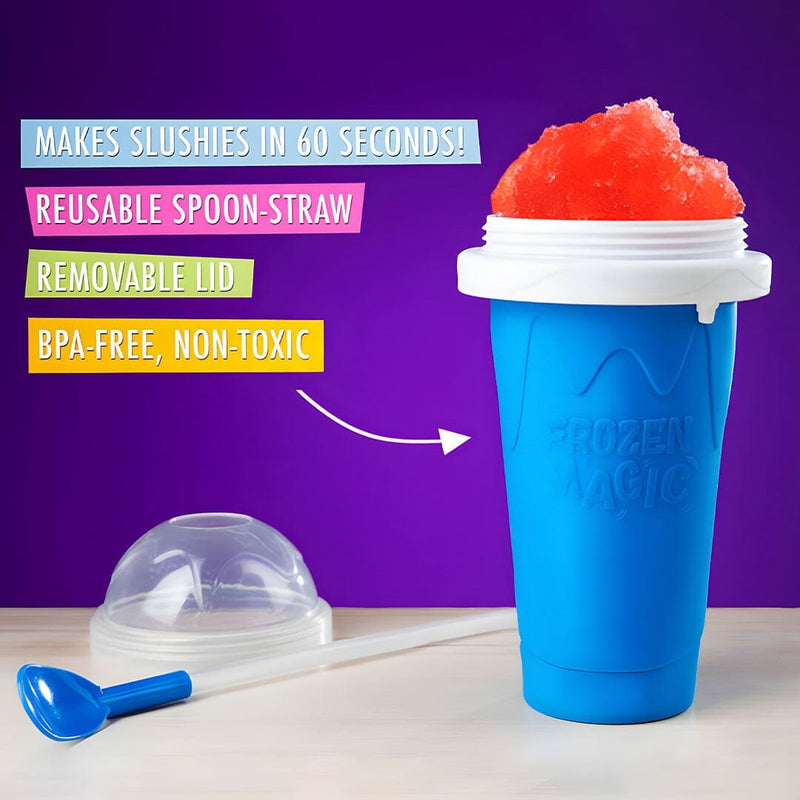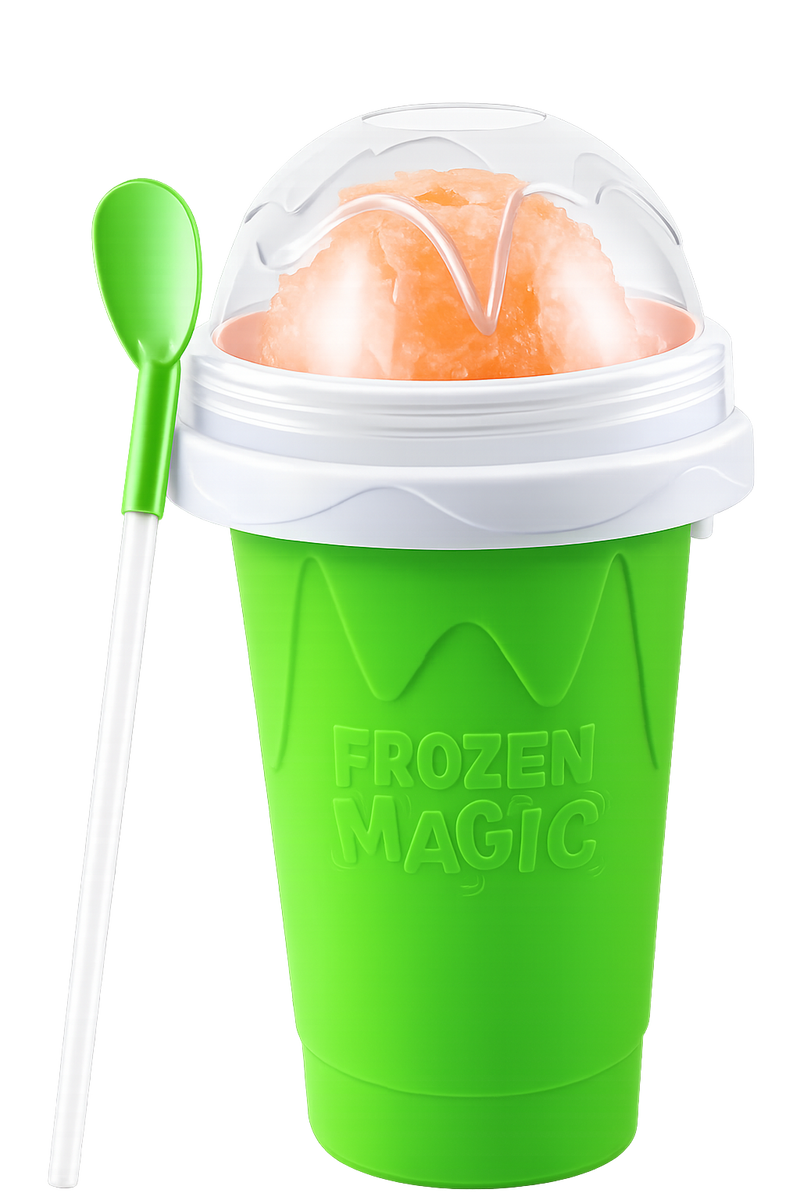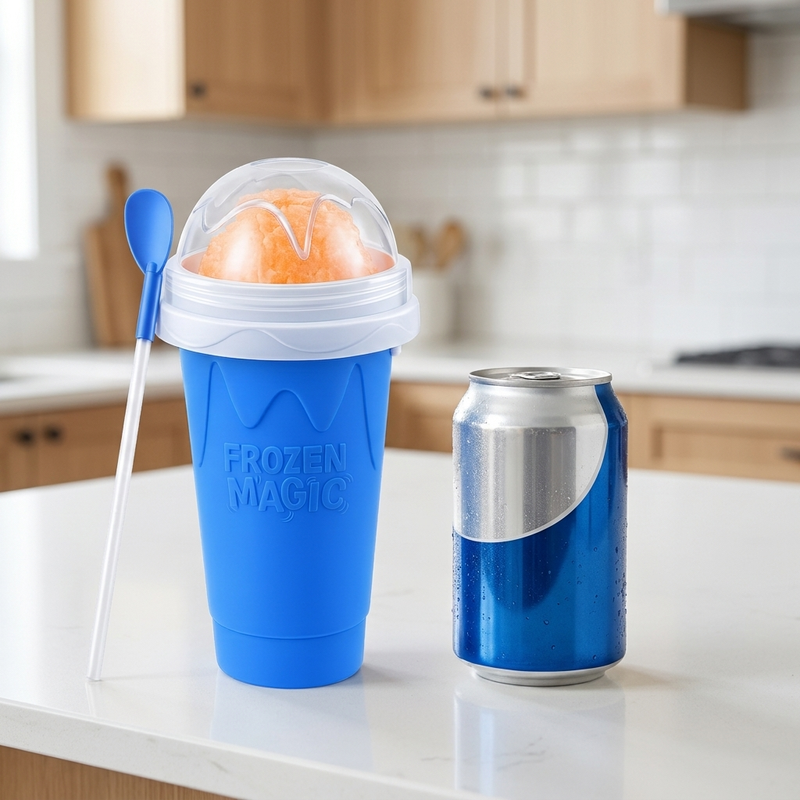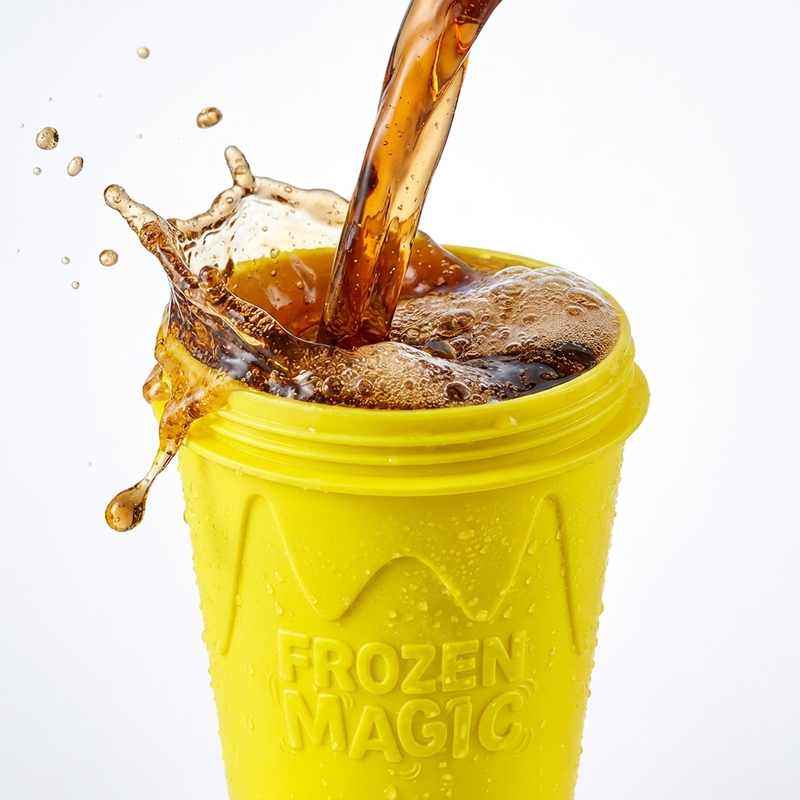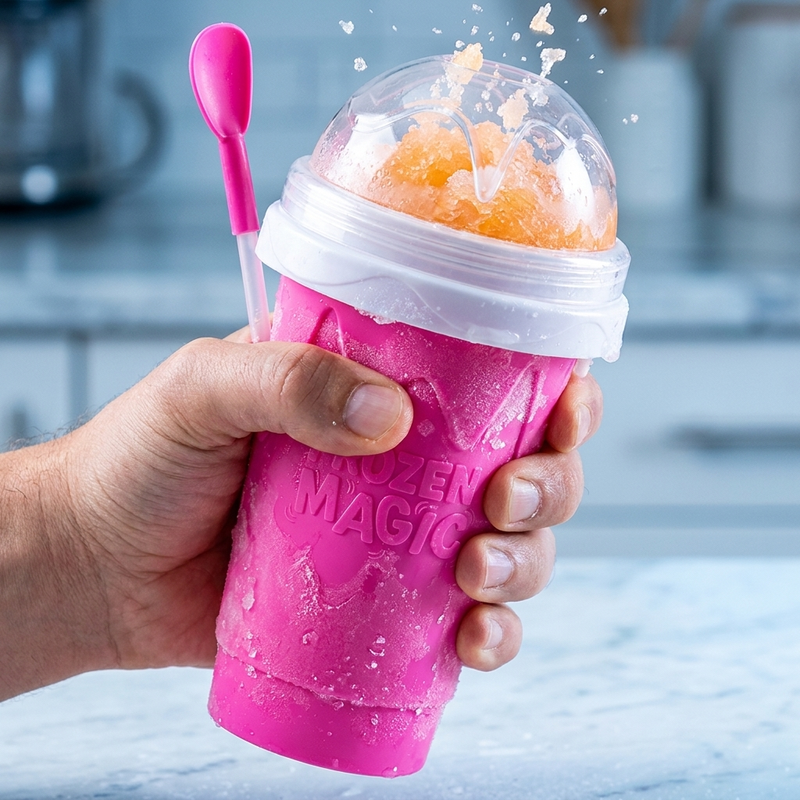

Sugar-free and diet drinks do work in a squeeze cup, but not on their own. Without sugar they set into hard flecks of ice in thin liquid rather than soft slush. The fix is to put back the job sugar was doing: a spoonful of real sugar, or one of the few sweeteners that behaves like it in the freezer.
Sugar is structural, not just sweet
What decides the texture is how much is dissolved in the drink. Plain water has nothing in it to get in the way, so the whole lot reaches its freezing point at once and sets hard. Dissolve something in that water and the freezing point drops, so it freezes gradually across a range of temperatures instead. The first crystals are pure ice, leaving the rest behind as a more concentrated syrup that has to get colder still before it freezes in turn. Slush is that halfway state: ice crystals suspended in liquid that has not frozen yet. Sugar holds a drink there well, simply because there is so much of it dissolved by weight.
The sweeteners in diet drinks are hundreds of times sweeter than sugar, so a can needs only a trace. You get the sweetness, but almost nothing dissolved to slow the freezing, so the drink behaves much like plain water and sets hard rather than slushy. If nothing thickens at all, rule out the ordinary causes with the freezing checklist first. If the cup is properly frozen and the drink is diet, this is your answer.
The simplest fix: put a little sugar back
Stir a teaspoon of sugar into your 300 ml of diet drink before you pour it in. If it still comes out icy, use two next time. This is not a return to full-sugar levels. A regular can holds several times that, so you keep most of the reduction and get the texture back.
Cold liquid dissolves granulated sugar slowly, and grains at the bottom do nothing. Three ways round that:
- Caster sugar. Finer grains, so it dissolves cold with a bit of stirring.
- Simple syrup. Sugar dissolved in hot water in advance, kept in a jar in the fridge. Mixes in instantly and is the tidiest option if you do this often.
- Honey, agave or maple syrup. Already liquid, so they blend straight in. All three carry flavour, which suits iced coffee and tea better than cola.
Stir it into the drink, never into the cup. The cup goes into the freezer empty and stays empty for four to six hours.
Which sugar substitutes actually behave
It comes down to one thing: whether any real weight of it ends up dissolved in the glass. Sweetness is irrelevant to texture. We have not tested every sweetener below, so take these as reasoning from the physics rather than results.
These help
- Allulose. Used in roughly the same quantities as sugar and dissolves readily, so there is real weight in the water doing the work. On the physics, the one to try first.
- Erythritol. Also measured by the spoonful rather than the drop, so it has bulk on its side. Slower to dissolve cold, so stir it through well and give it a minute before the drink meets the cup.
- Granulated blends sold to measure like sugar. These tend to help: the reason they measure like sugar is a bulking agent making up the volume.
Whichever you use, start with a level teaspoon rather than a heaped one, and work up only if it comes out icy.
These do not
Sucralose, aspartame, saccharin, and pure stevia or monk fruit drops add sweetness and nothing else. They weigh next to nothing, so the drink still freezes like water. Fine on top of a bulk sweetener, useless alone.
Drinks that are not worth the freezer space
- Plain and sparkling water. Nothing dissolved in it, so it freezes solid. Zero-sugar flavoured waters are the same drink with a scent added.
- Sugar-free squash and cordial. Once diluted, flavoured water again.
- Diet cola straight from the can. The one everyone wants to work. What you get instead is thin liquid with hard flecks. Sweeten it first.
- Unsweetened black coffee or tea. Same problem, same fix: sweeten it before you chill it.
Zero-sugar sports drinks are the interesting case: they carry salts, and dissolved salt lowers a freezing point much as sugar does, so on paper they have more going for them than diet cola. If yours comes out icier than you want, sweeten it too.
The parts that have nothing to do with sugar
Sweetening will not rescue a cup that was not cold enough to start with. It wants four to six hours of freezer time, empty and upright, and the drink should go in cold from the fridge. Then squeeze steadily for about a minute. The full method is here.
Milk is the exception worth knowing. Unsweetened does not mean unslushable: milk carries natural sugars as well as fat, so it works well, and oat milk is the best dairy-free option.
What to expect, honestly
A sweetened diet drink is unlikely to match a full-sugar one: lighter, a shade icier, closer to fine crushed ice than the spoonable texture cola or lemonade gives you. A good drink, not an identical one. If you would rather not measure anything, these drinks slush with no help.
If you use syrup or honey, rinse the cup as soon as you finish. Sugar dries sticky in the lid seal and the spoon-straw. Wash by hand in lukewarm water with mild soap. Never the dishwasher and never hot water: heat damages the freezing gel sealed inside the wall of the Slushy Cup, and the damage is permanent: once a cup has been through a dishwasher cycle it will never slush the same way again, however long you refreeze it. The rest is on the FAQ page.
Common questions
Can you make a slushy with diet soda?
Yes, but only if you add something with bulk to it. Straight from the can it freezes hard and patchy. Stir in a teaspoon of sugar, or a bulk sweetener such as allulose, and it slushes.
Does stevia work in a slushy cup?
Pure stevia drops do not. The quantity is far too small to change how a drink freezes. Granulated blends usually do, since they are mostly bulking agent by weight. Read the ingredients, not the front of the packet.
How much sugar do I actually need?
Less than you would think. A teaspoon in a 300 ml serving shifts most diet drinks from icy to slushy. A small fraction of what the full-sugar version contains.