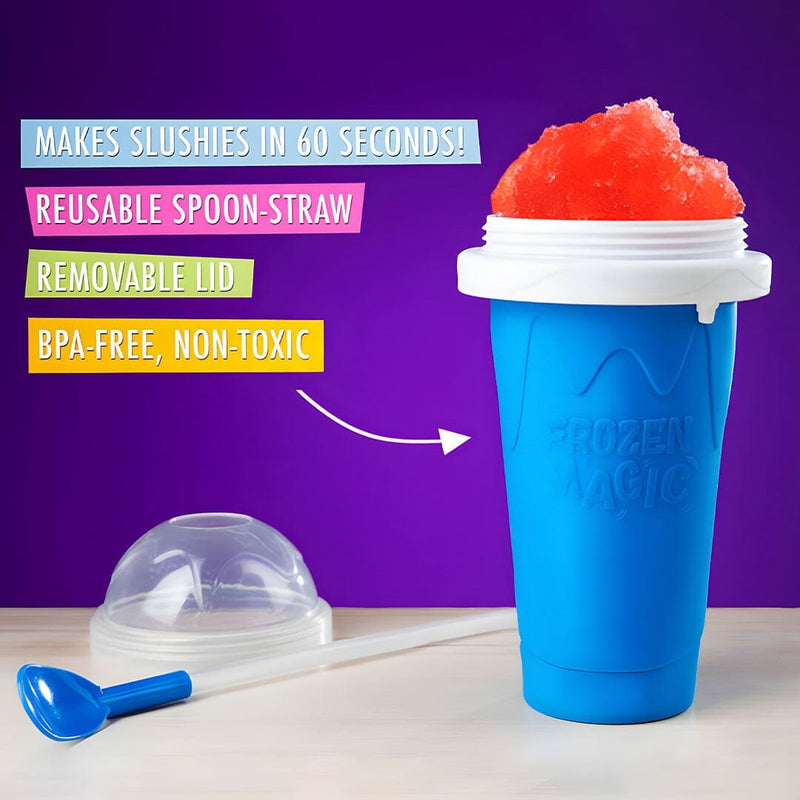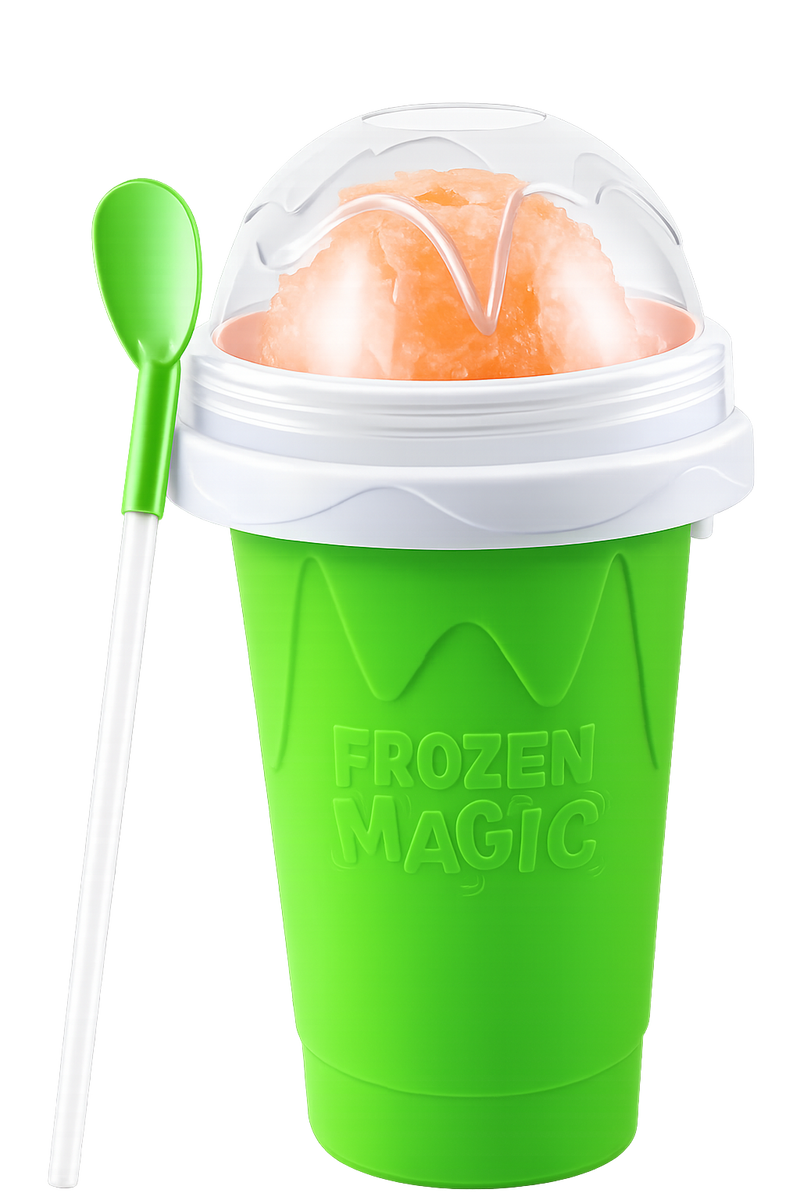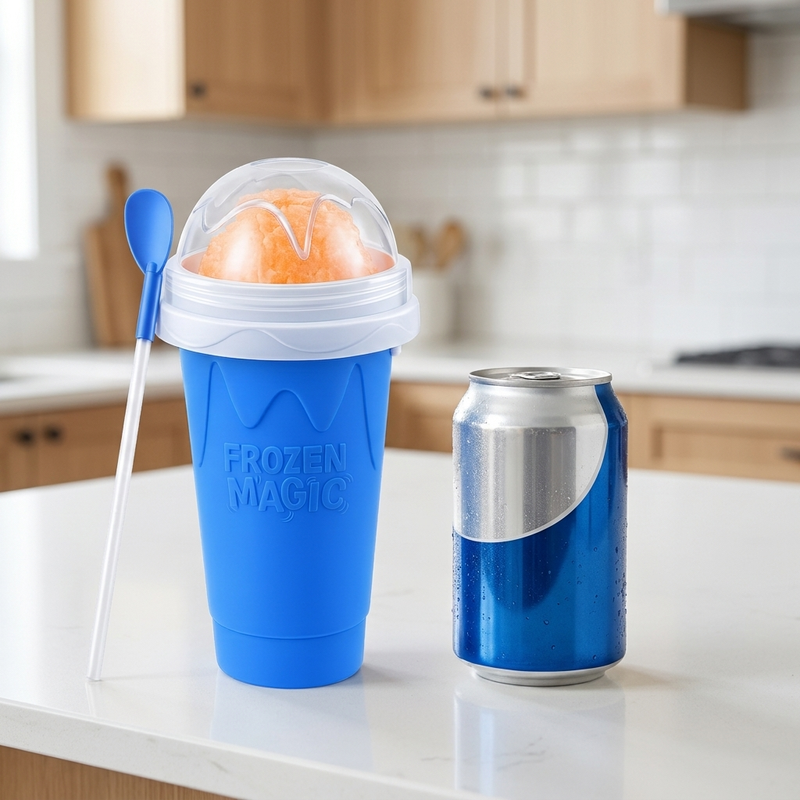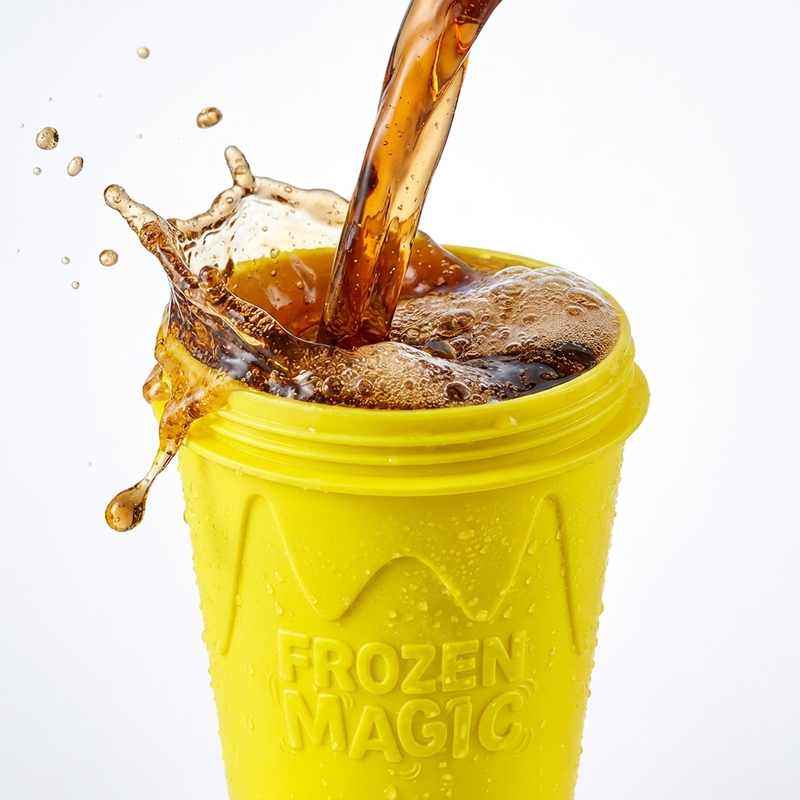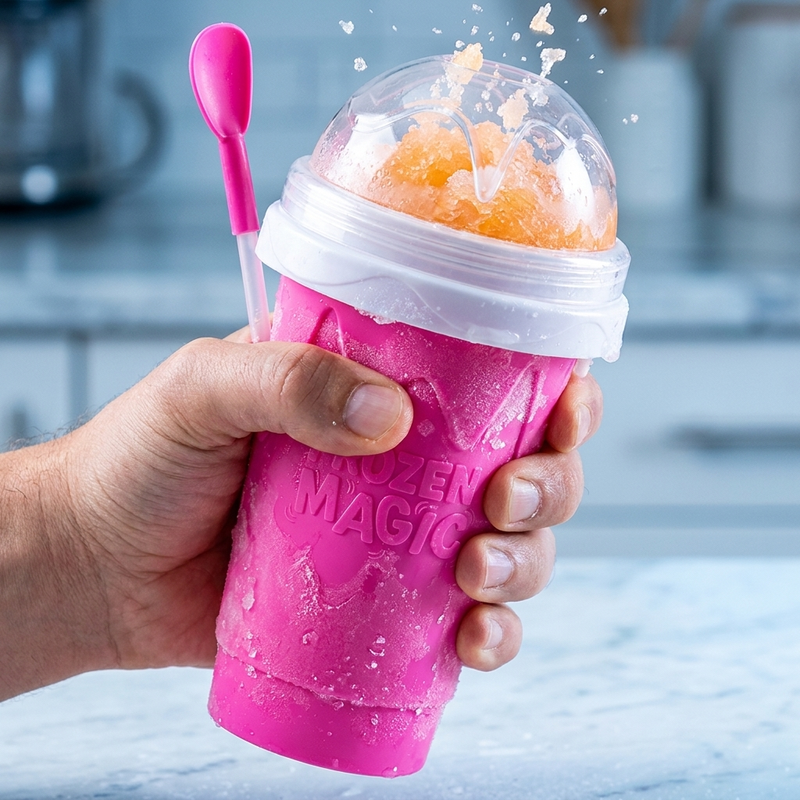

An empty Slushy Cup needs four to six hours in a freezer set to −18°C (0°F). Overnight is the easiest way to get it right, because it takes the guesswork out of whether the gel sealed in the walls has properly set.
That range is not us hedging. Four hours is realistic in a cold freezer with air moving around the cup. Six or more is what you need if the freezer is packed, running warm, or opened every ten minutes. Here is how to tell which you have, and how to check the cup rather than the clock.
Why it takes hours and not minutes
The cup weighs 475 g, and the work is done by the freezing gel sealed inside the wall, which never touches your drink. In the freezer that wall does two jobs in order: first it cools down, then it actually freezes.
The second of those is the slow one. Anything turning from liquid to solid gives up a lot of heat while it does so, and barely drops in temperature during that stretch. That is why a cup can feel properly cold after ninety minutes and still be soft in the middle. Cold on the outside is not frozen through.
Freeze times by freezer setting
- −18°C (0°F) or colder: four to six hours. This is the temperature to aim for, and most standalone freezers are set at or below it.
- A fast-freeze or super-freeze setting: nearer the four-hour end. Useful when the cup has just been washed and you want it ready the same evening.
- Anything running warmer than that: expect it to take considerably longer than six hours, and a softer result at the end of it. Plenty of freezer dials carry no numbers, just 1 to 5; if yours is one of those and the cup keeps coming out soft, turn it up a notch.
- The small ice box inside a fridge: the warmest spot you could pick, and often not cold enough to do the job properly. Treat overnight as the minimum, and chill the drink hard first, because a colder drink asks less of the cup.
If you do not know what your freezer holds, a cheap fridge thermometer answers it in a day. −18°C is the standard for storing food safely anyway. Our FAQ page has the temperature and care rules in short form.
The "is it ready?" test
Forget the timer. Take the cup out and press your thumb firmly into the side wall, about halfway up.
- The wall barely moves. It is ready. The whole wall feels rigid, not just the surface.
- It dents and springs back. Not ready. Give it another two hours and test again.
- It feels cold but still soft. Furthest from done. The outside has chilled and the gel has not set, which usually points at a freezer running too warm.
A cup straight from a very cold freezer can be so stiff you can hardly squeeze it. That is not a fault, it is a fully frozen cup. Stand it on the counter for a minute before you pour and the walls will give.
What actually slows it down
A packed freezer
A full freezer holds its temperature well, but it stops air circulating, and moving air is how heat leaves the cup. Wedged between two boxes of frozen peas it takes longer than it would on a clear shelf. Give it a gap on at least two sides.
Putting the cup in warm or wet
Straight after a wash the cup is warm and wet, and both have to go before the gel can set. Hand wash only, in lukewarm water with a mild soap, then dry the outside before it goes in. Hot water and dishwashers damage the freezing gel, and that damage is permanent: once a cup has been through a dishwasher cycle it will never slush the same way again, however long you leave it in the freezer.
A door that keeps opening
Every time the door opens, warm room air pours in and the freezer spends the next stretch catching up rather than freezing your cup. That is the real reason overnight works so well: nobody is opening the door.
Frost under the cup
In a manual-defrost freezer, thick frost sits between the cup and the shelf underneath. If yours is due a defrost, that will slow things down.
Freezing it with a drink already in it
The cup goes in empty, every time. Freezing it with liquid inside gives you a block of ice you cannot squeeze. The how it works page runs through the four steps in order.
Refreezing between drinks
A used cup needs the full freeze again, not a top-up. Its cold has gone into your drink, so you are starting from scratch. Rinse it, dry the outside, and stand it upright in the freezer.
If slush is a daily habit in your house, that freeze time is the real limit on how often you get one. A second Slushy Cup takes the limit away, which is why the bundles exist: 10% off two, 15% off three, and 20% off four or more.
Frozen solid and still not slushing?
Then freeze time is not your problem, and the drink usually is. Soft slush depends on the sugar in the drink, so sugar-free and diet versions set hard instead, and plain water just freezes into a lump. Stir a spoonful of sugar into a diet drink and it behaves. The other common culprit is a drink poured in at room temperature, which asks far more of the cup than a cold one.
Our guide to the best drinks for a Slushy Cup covers what works. If you have ruled the drink out too, work through the freezing checks next.
Common questions
Can I freeze it faster than four hours?
Not meaningfully. You can shave a little off by standing it where the air is coldest and moving, usually the back of the freezer with space around it, and by using a fast-freeze setting. The heat that has to leave the gel is the same either way.
Can I just leave the cup in the freezer all the time?
Yes, and that is how it is meant to be used. Store it empty, dry and upright, and it is ready whenever you want a drink.
Do I have to refreeze it after every drink?
Yes. One full freeze gives you one slush. The cup stays cool afterwards, but the gel has thawed and needs another four to six hours before it will thicken anything.