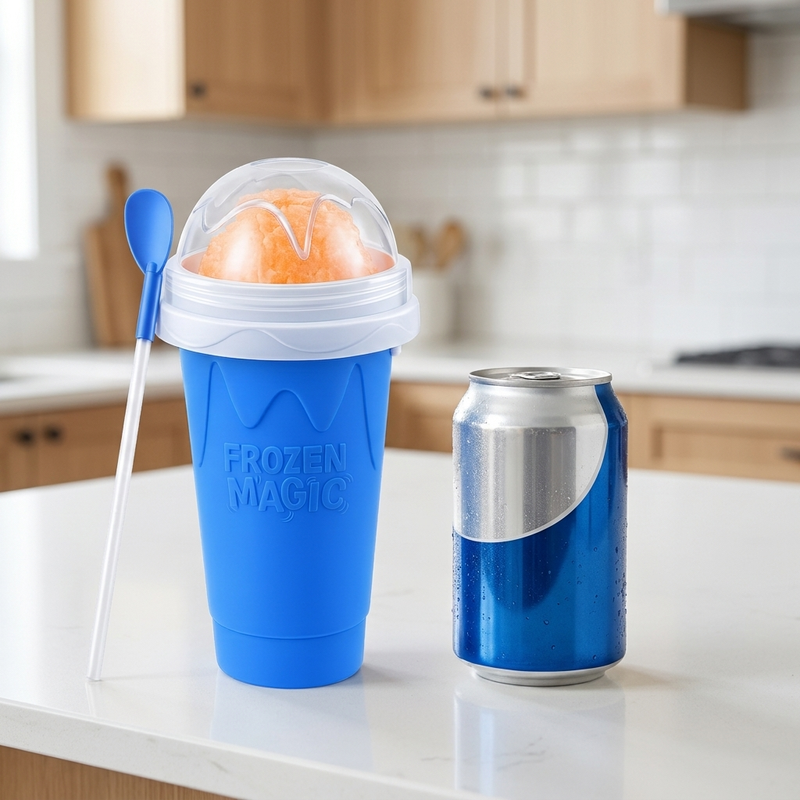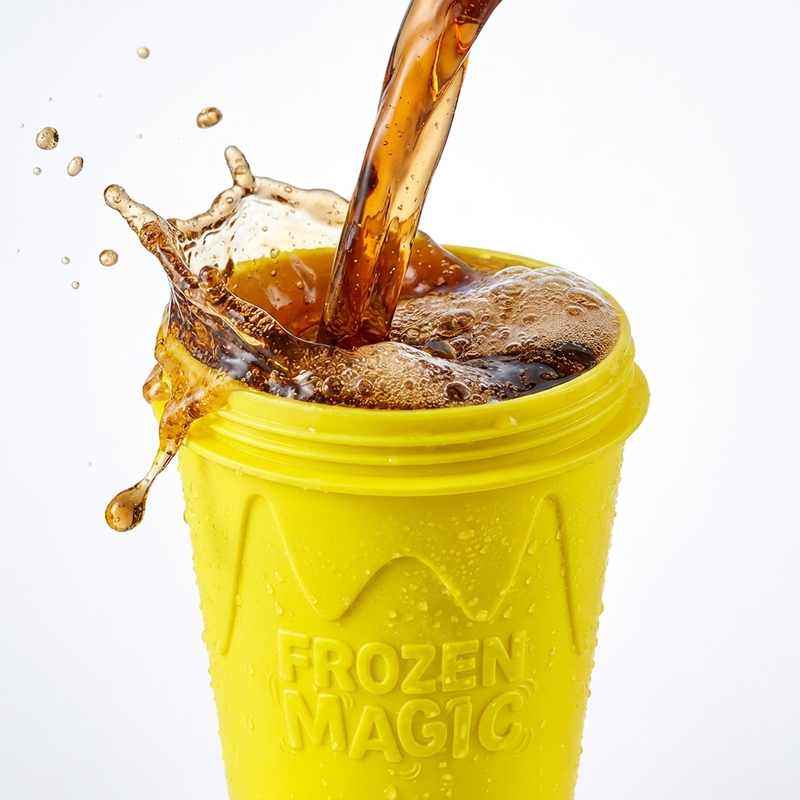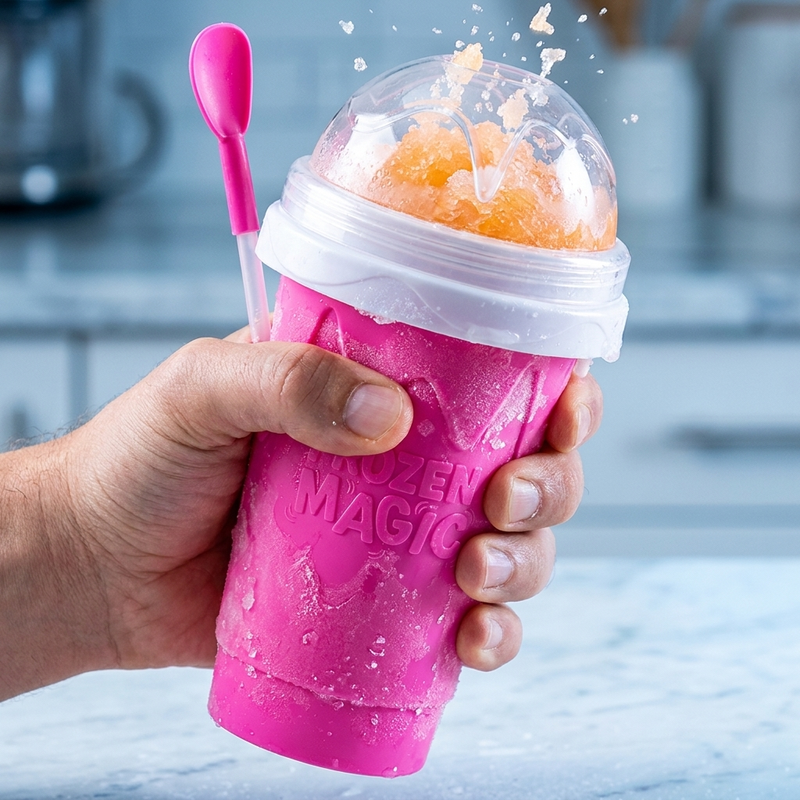

The Slushy Cup is hand wash only, in lukewarm water with a little mild soap. It is not dishwasher safe, on any cycle or any rack, and it should never meet hot water, a kettle or a steam steriliser.
That is not a cautious label. The part that makes the cup work is sealed inside the wall, heat damages it, and the damage does not come back. Here is the reasoning, then the routine.
Why heat is the real problem
The cup's wall carries a sealed pocket of food-safe freezing gel, kept apart from whatever you pour in. That gel is the product: it charges over four to six hours in the freezer with the cup empty, then does the work while you squeeze for thirty to sixty seconds. The full walkthrough of how the cup works covers the cycle in more detail.
A dishwasher holds everything inside it at high temperature, in steam, for an hour or more, and that is exactly what the gel cannot take. Every other rule on this page follows from that one fact.
Nothing looks different afterwards. The cup comes out clean, dry and the right colour, goes back in the freezer, and the next morning the slush is thin. A cup that has been through a dishwasher will never slush the same way again, and no amount of extra freezing time recovers it.
The detergent is the other half of it. The cup asks for mild soap and lukewarm water; a dishwasher gives it neither. Hot tap water sits on the same list, which is why lukewarm is the ceiling.
The one-minute rinse
Do this while the cup is still in your hand and nothing has dried on.
- Lift the lid off and pull out the spoon-straw, so all three parts are separate.
- Rinse each one under running water, cool or lukewarm, until the water runs clear.
- Add a drop of mild washing-up liquid and wipe the inside with a soft sponge or your hand.
- Run a narrow straw brush through the spoon-straw; a rinse alone never reaches all of it.
- Wipe the underside of the lid, arrows and groove included.
- Shake the water out, dry the outside, and stand the parts apart to air dry.
Milk, syrup and anything that dries sticky
Dairy is the one to stay ahead of. Milk dries fast inside the spoon-straw and around the lid, and it is much harder to shift once it has. If you use the cup for milk, milkshakes or oat milk, rinse it straight away.
If something sweet or milky has already dried on, do not scrub at it and do not reach for hot water to hurry it along. Fill the cup with cool water and a drop of soap, rest the lid on top, and leave it fifteen or twenty minutes. Sugar dissolves given time, and dried milk softens enough to wipe away.
Getting a smell out
Some drinks leave a note behind after a rinse. Coffee, chocolate milk and heavily flavoured energy drinks are the usual culprits.
- Start with time rather than force: cool water, a drop of washing-up liquid, half an hour on the side.
- If it is still there, spread a paste of bicarbonate of soda and water around the inside, leave it a while, then rinse out with lukewarm water.
- White vinegar in cool water is the other option; rinse thoroughly afterwards.
- Dry everything before it goes away. A cup put back damp can develop a mustiness of its own.
- Mild washing-up liquid is as strong as we would go. Not bleach, not heavily perfumed cleaners.
What never to do
- Any dishwasher cycle, eco settings and the top rack included.
- Hot water from the tap, a kettle, a pan on the hob, or a steam steriliser.
- Any appliance that heats: microwave, oven, warming drawer.
- Drying it on a radiator or a warm windowsill.
- Wire wool, scourers and scouring powder; a soft sponge or your hand is enough.
Refreezing after a wash
Dry the outside before it goes in. A cup that goes into the freezer wet can ice itself to the shelf, which is a nuisance easily avoided.
Stand it upright rather than on its side, so the gel settles evenly through the walls. Leave the lid off or resting loose so the inside airs, and keep it clear of strongly smelling frozen food.
Then give it four to six hours, or overnight, which is easier to plan around. If you want a second slush the same afternoon, the only answer is a second cup already frozen. That is why the bundles take 10 percent off two cups, 15 percent off three and 20 percent off four or more.
If yours has already been through a dishwasher
We would rather be straight with you than hopeful. A cup that has been through a cycle will never slush the same way again, and freezing it for longer does not bring it back. Wash it by hand from here on, but do not expect the slush to return.
Before you settle on that, rule out the ordinary causes, because they disappoint in the same way. A drink that went in warm, or a freeze cut short, will not slush properly whatever state the cup is in. Sugar-free and diet drinks set hard rather than soft, and a spoonful of sugar fixes that. Retest with a cold, full-sugar drink; the freezing checklist runs through the causes in order.
Leaking is a separate question, with two causes: the lid not seated on the arrows, and filling above the top ring. Check both before concluding anything is wrong with the cup.
A cup that arrived faulty is a different matter again. Every order carries a 30-day money-back guarantee, change of mind included, and the FAQ sets out how returns and replacements work.
Common questions
Is the Slushy Cup dishwasher safe?
No. Hand wash only, in lukewarm water with mild soap. The top rack is not a halfway house: the damage comes from the heat and the detergent, not the shelf.
Can I use hot water if I am only giving it a quick rinse?
Still no. Lukewarm is as far as it goes. Hot water is named alongside dishwashers as something that damages the freezing gel, and a brief rinse is no exception.
How often does it need more than a rinse?
A rinse after every drink is enough for juice, squash and fizzy drinks. Reach for the bicarbonate of soda after milk, coffee or anything strongly flavoured, or whenever a smell outlasts a rinse.