
A slushy cup is worth it if you drink a lot of cold drinks at home, have freezer space, and can plan about six hours ahead. It is not worth it if you want slush on demand with no pre-freeze, need to serve several people at once, or drink almost nothing but diet and sugar-free.
That is the short answer. The detail, including the parts that put people off, is below.
What you are actually buying
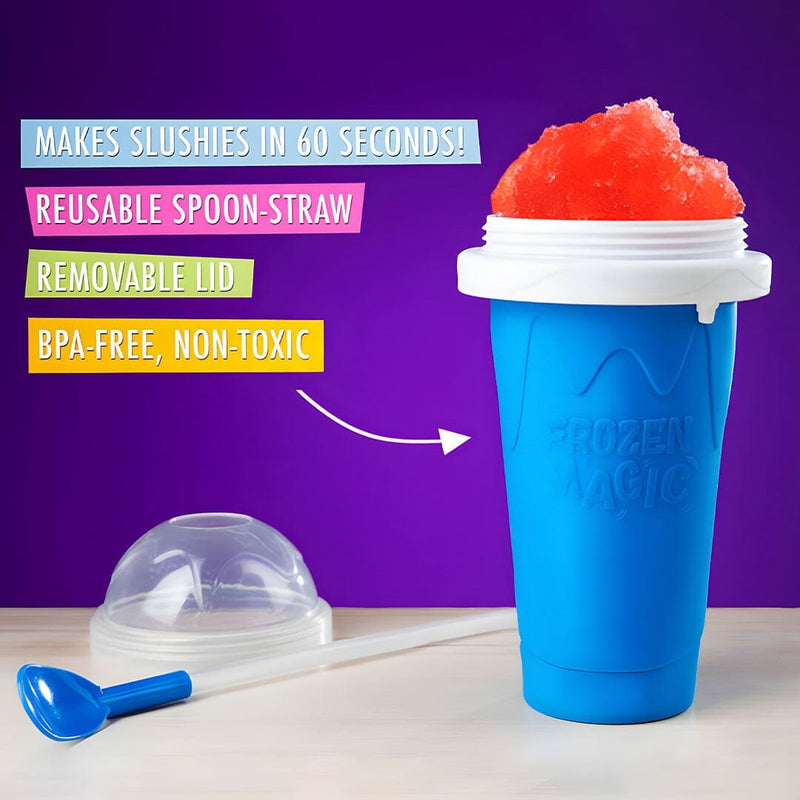
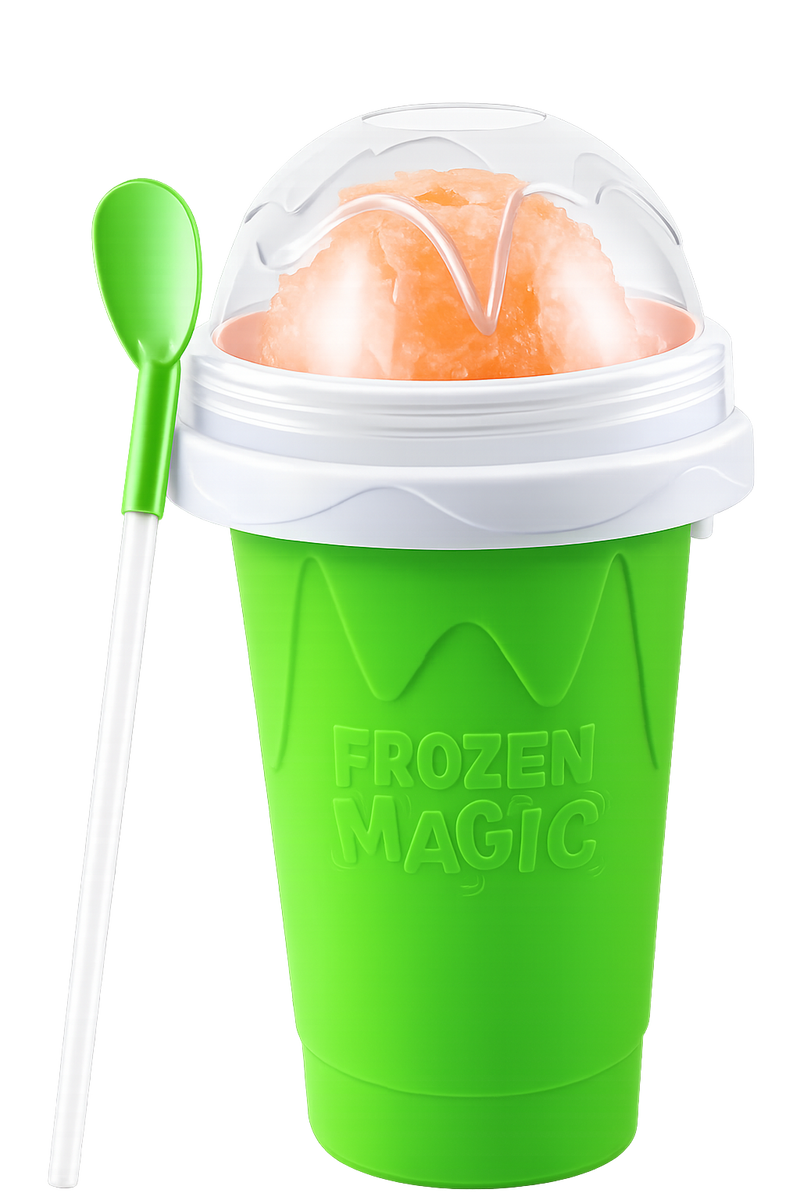
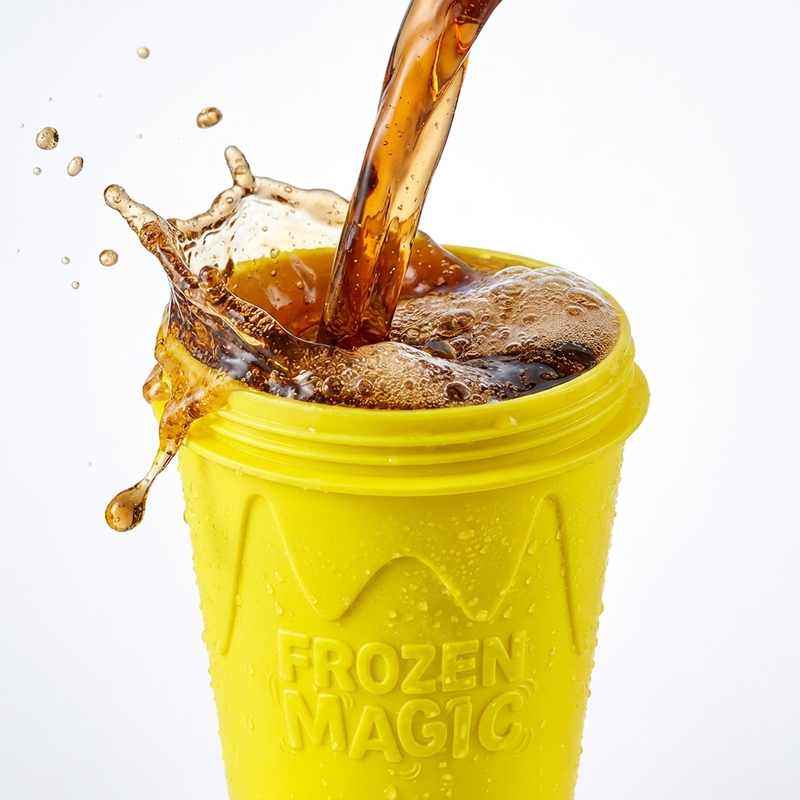
There is no motor, no blade and no ice. The wall of the cup holds a sealed food-safe freezing gel that never meets what you are drinking. You freeze the cup empty for four to six hours, pour in something cold, then squeeze the sides for 30 to 60 seconds, by which point it has thickened to slush. If you want the method step by step, we have it on one page.
The clips you have seen are not faked. What they leave out is the four to six hours beforehand, and skipping that is how you end up with a very cold drink instead of a slush.
Three costs that are not printed on the box
You have to think ahead
The cup lives in the freezer rather than a cupboard. The routine that works: rinse it, dry the outside, stand it upright and forget about it, so a cold one is always waiting. In a household where nothing gets put back, that habit is what lets you down, not the cup. When a cup comes out early the symptoms are predictable, and we have written up the checks.
It is one drink per cycle
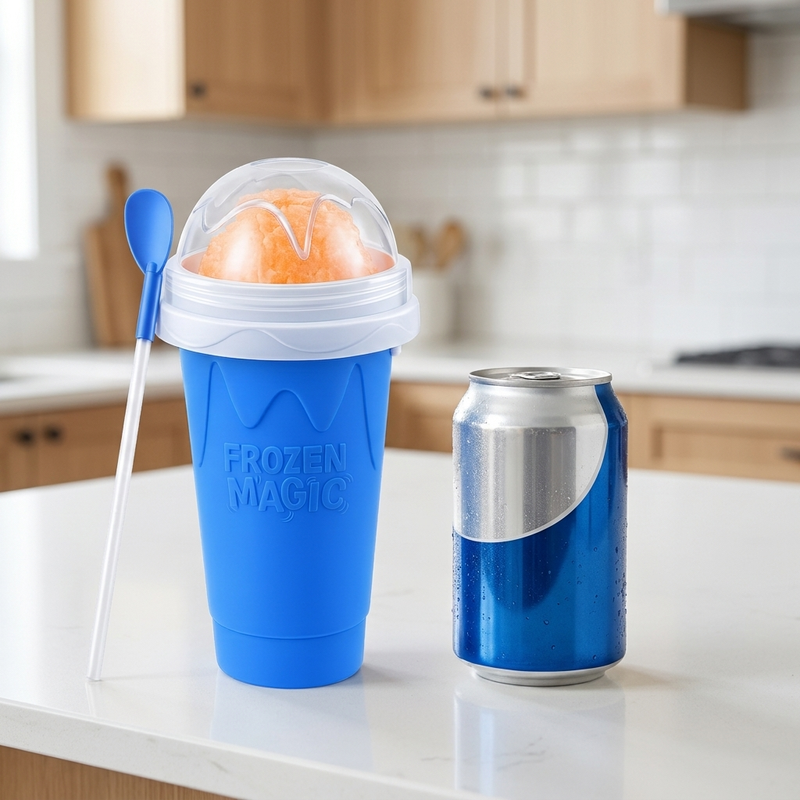
Capacity is 300 ml, roughly 10 fl oz, one generous serving. When that is gone the cup goes back in for another four to six hours before it will do the same again, and overnight is the easy way to manage it. The cold lives in that frozen wall, so once it is spent, back in it goes.
Hand wash, every time
Lukewarm water, mild soap, by hand. Not the dishwasher and not hot water: both damage the freezing gel sealed in the wall, and that damage is permanent. Extra time in the freezer will not bring a heat-damaged cup back. It will never slush the same way again. It is under a minute of work, but a minute you owe it after every drink.
Who it is genuinely worth it for
- Households with children. It is soft enough for a child to squeeze, nothing is sharp and nothing plugs in, and making the drink is half the fun.
- Anyone who buys slush or iced coffee while out. If that is a standing habit rather than a treat, the spending moves from repeated to one-off. Milk works in the cup, and oat milk is the pick of the dairy-free options. Just not milk near its date.
- People with no counter space. It does a machine's job without taking up a machine's worth of kitchen.
- Places with a freezer but no power to spare. Caravans, holiday lets, offices, student kitchens.
Who should not buy one
- Nothing in your house ever gets put back. This rests on somebody rinsing the cup and putting it back in the freezer, unprompted, most days. If that is nobody you live with, it will live on the draining board.
- There is no clear slot in the freezer. It is roughly 8 by 3.5 inches and 475 g, and it wants a space it can stand in. A freezer packed solid is a reason to wait rather than buy.
- Two or three of you will want one at the same moment. A cup holds 300 ml, then needs its four to six hours back. The bundles exist for exactly that, but if a second cup is off the table, this will frustrate you.
- The fridge is all diet and sugar-free. Sugar is what gives slush its soft, spoonable texture; without it drinks set hard, and plain water freezes solid. A spoonful of sugar fixes that, which is no use if avoiding sugar is the point. Our guide to which drinks slush well covers the trade-offs.
- What you actually want is a smoothie. If the picture in your head is thick blended fruit, this will not make it. The cup chills a liquid you pour in, and that is all.
So is it worth the money?
Value here is about repetition. Nothing gets refilled, there are no pods, no ice, no blender, nothing to plug in, so the outlay is one-off rather than ongoing, and how long it keeps working comes down mostly to hand washing. Ours is rated 4.7 from 1,277 reviews, a solid score rather than a perfect one, and when one does not work it is nearly always the same thing: the cup went in warm or came out early.
If you are weighing up brands rather than deciding whether to own one at all, the five things worth checking before you buy will be more use than this page.
Why trying one is low risk
We would rather you ruled yourself out here than after the parcel turns up, which is why that list is blunt. If you are still in, the Slushy Cup carries a 30-day money-back guarantee that covers a change of mind, not only faults, so a fortnight of honest use will tell you whether the routine fits. Shipping is free worldwide and tracked.
Two practical notes. Return postage on a change-of-mind return is yours to cover; anything faulty is on us. And bundles take 10 percent off two cups, 15 percent off three and 20 percent off four or more, which also solves the one-drink-per-cycle problem. The FAQ page has the full wording.
Common questions
Is a slushy cup worth it for adults, or is it a children's thing?
It suits both. Adults tend to use it for iced coffee, sweetened iced tea, lemonade and the occasional cocktail. Children use it for juice and fizzy drinks. The difference is who remembers to put it back in the freezer.
Can I skip the pre-freeze if the drink is already very cold?
No. The cold comes from the frozen wall of the cup, not from the drink. Starting cold gives a better and faster result, but an unfrozen cup gives you no slush at all, however long you squeeze.
How many should I buy?
One is enough to find out whether you like it. If two people will want a slush on the same afternoon, two is the honest minimum, since a used cup needs its four to six hours before it works again.